
Unlock Instant Connectivity Get Your ESIM Card Now
Did you know an eSIM card is actually a tiny chip soldered directly inside your phone, not a physical piece of plastic you can remove? It works by downloading a digital profile to your device, so you can activate a mobile plan without ever touching a SIM tray. The biggest benefit is that you can switch between your personal, work, and travel plans instantly, all while keeping your phone’s physical slot free. To use it, simply scan a QR code from your carrier or download their app to get started in minutes.
What Is an Embedded SIM and How It Works
An embedded SIM, or eSIM card, is a programmable chip soldered directly into a device’s motherboard, replacing the physical plastic card you snap into a tray. Instead of swapping out a physical card to change carriers, you remotely download a digital mobile profile onto the chip. You activate this by scanning a QR code from your provider or using their app, which writes the network credentials to the eSIM. The chip itself acts as a secure container, storing multiple profiles at once, though you typically use only one at a time. You can switch between carriers through your device settings without ever touching hardware, making the process instant and eliminating the need to wait for a physical card to arrive in the mail.
Breaking Down the Technology Behind Digital SIMs
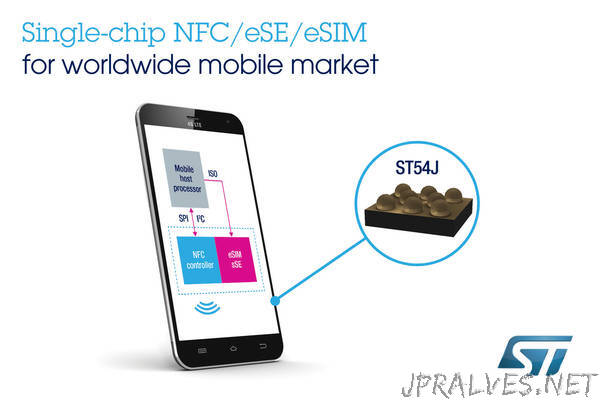
An eSIM’s core technology replaces the physical plastic card with a tiny, rewritable chip soldered directly onto your device’s motherboard. This chip, compliant with the GSMA’s Remote SIM Provisioning standard, stores multiple operator profiles securely in a dedicated secure element. When you scan a QR code or download a carrier app, your device uses over-the-air (OTA) provisioning to fetch and write the encrypted subscriber identity onto that chip. This dynamic process allows you to https://baztel.co/esim-plans/esim-japan instantly swap between stored plans—switching from a local data profile to a travel operator—without touching any physical hardware. The chip’s small footprint also frees up internal space for larger batteries or slimmer designs.
Key Differences from Traditional Plastic SIM Cards
The primary difference is that an eSIM is soldered directly onto a device’s motherboard, eliminating the need for a physical plastic card and slot. This frees up internal space and improves water/dust resistance, as there is no removable tray. Switching mobile networks is purely software-driven, requiring only a QR code or app instead of waiting for a new plastic SIM to arrive. Users can store multiple network profiles simultaneously on a single eSIM chip, though only one can be active at a time for calls and data.
- No physical swapping: changing carriers is a digital process, not a card swap.
- Space savings: the removed SIM tray allows for larger batteries or thinner device designs.
- Reduced physical damage: there is no card to lose, bend, or scratch.
How Activation and Profile Switching Function
Activation of an eSIM begins when a user scans a QR code or downloads a profile from a carrier’s app. This action installs a digital profile onto the embedded chip, binding the device to the network. Profile switching lets a user store multiple profiles—such as personal and business lines—and toggle between them via device settings. The manual profile selection occurs without physically swapping a card; the active profile handles calls and data, while others remain dormant until reactivated. This process is instantaneous and reversible.

- Scan a carrier-provided QR code to download and activate a new profile.
- Store up to five or more profiles on a single eSIM chip.
- Switch active profiles directly in the device’s cellular settings.
- Deactivate one profile before enabling another to avoid conflicts.
Top Advantages That Drive the Shift to Digital SIMs
The clatter of a missed connection at the airport gate fades when you switch carriers in seconds with eSIM card technology. No more fumbling for a paperclip to swap physical trays while your luggage blocks the aisle. This shift to digital SIMs liberates you from carrying multiple phones for work and travel; one device now holds several profiles, letting you toggle between a local data plan in Tokyo and your home number back in Chicago without ever removing a card. Your phone stays sealed against dust and water, a practical durability win. The advantage is effortless roaming—you buy and activate a digital plan from your couch, landing connected, not scrambling for a local shop before your train departs.
Convenience of Switching Carriers Without Swapping Hardware
The primary convenience of switching carriers with an eSIM lies in eliminating the physical SIM card swap. Users can change providers directly through device settings, often within minutes. This carrier switching flexibility is invaluable while traveling, where one can activate a local data plan without removing the home SIM. This process requires no tool, tray, or risk of losing the tiny physical chip. The transition occurs via a digital profile download from the new carrier, turning what was once a hardware errand into a purely software-driven task.
Q: How quickly can I switch carriers using an eSIM?
A: Typically within minutes by selecting a new plan and downloading its profile, with no need to wait for a physical card or swap hardware.
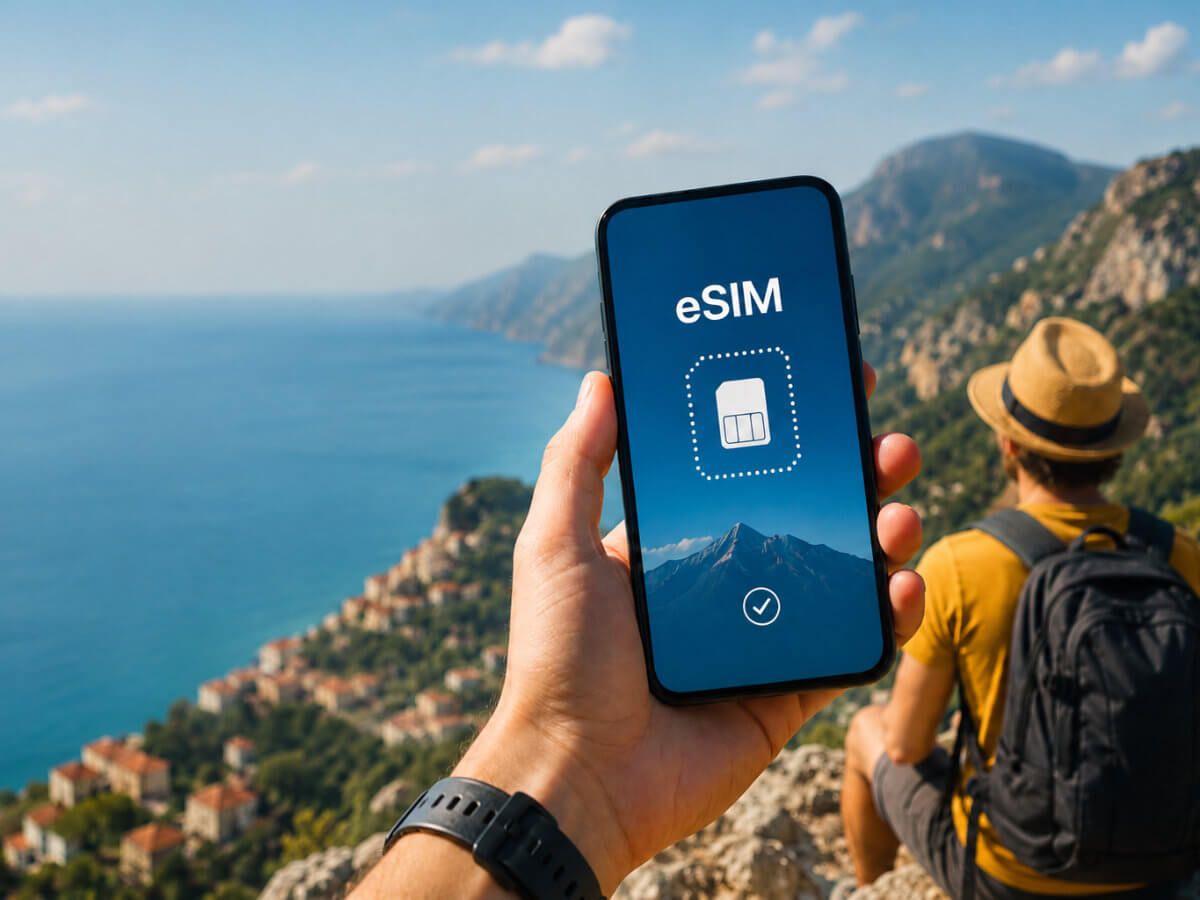
Space Savings for Sleeker Device Designs
The elimination of the physical SIM tray directly translates to significant internal component reduction, allowing manufacturers to reclaim precious millimeters of depth and width within a device’s chassis. This reclaimed space is not left empty; it enables the inclusion of larger batteries for extended runtime or more advanced camera modules that would otherwise be impossible to fit. For users, this means access to genuinely thinner and lighter smartphones and wearables without sacrificing performance or battery life. Consequently, you benefit from a more ergonomic, pocket-friendly design that feels less cumbersome during daily use, a direct result of the simplified internal layout eSIMs provide.
- First, the internal cavity once housing the SIM tray and connector is liberated for alternative component placement.
- Next, OEMs can then allocate this vacant volume toward enlarging the battery cell or integrating a superior haptic engine.
- Finally, the device’s external profile is physically reduced, producing a sleeker, more seamless form factor with fewer ingress points for dust or moisture.
Enhanced Security and Remote Management Features
eSIMs dramatically enhance security by eliminating the physical SIM card, which is vulnerable to theft, cloning, or tampering. With an eSIM, your profile is encrypted directly onto the device’s chip, making unauthorized access far more difficult. The real advantage, however, is remote provisioning for instant security control. If your device is lost or stolen, you can instantly disable the eSIM profile from any browser, preventing fraudulent use and data breaches. This remote management also allows you to seamlessly switch profiles for travel, work, or emergencies without handling a fragile plastic card.
Q: How does remote management improve security compared to a physical SIM?
A: Remote management lets you instantly lock or delete an eSIM profile on a lost device, whereas a physical SIM remains active until physically removed or blocked by a slow carrier process.
Step-by-Step Guide to Setting Up Your First eSIM

Setting up your first eSIM is simpler than fiddling with a physical card. First, confirm your phone is eSIM-compatible (look in Settings > Cellular or Mobile Data). Next, buy an eSIM plan from a provider; they’ll email you a QR code or an activation code. Go to your phone’s cellular settings, tap “Add Cellular Plan,” and scan the QR code. Follow the on-screen prompts to label the line (e.g., “Travel” or “Home”).
You can store multiple eSIMs on one phone, but only use one for data at a time—so turn off your primary line if you want to avoid roaming charges.
Finally, assign your data preference to the new eSIM. That’s it—you’re ready to connect without swapping anything.
Checking Device Compatibility and Carrier Support

Before purchasing an eSIM, verify device compatibility by checking your phone’s Settings > About Phone for an EID number, which confirms embedded eSIM hardware. Next, confirm carrier support: contact your current provider or visit their website to see if they issue eSIM profiles. For an unlocked device, follow this sequence:
- Cross-reference your device model (e.g., iPhone 14) with the carrier’s official eSIM whitelist.
- Ensure your carrier offers either a QR code or in-app provisioning for eSIM activation.
- Test that your network plan includes compatible bands for your region, since carrier support often ties to specific frequencies.
Obtaining and Scanning a QR Activation Code
After purchasing your eSIM plan, you’ll receive a QR activation code via email or directly in the provider’s app. To install it, open your phone’s settings, head to “Cellular” or “Mobile Data,” and tap “Add eSIM.” Select “Scan QR Code” and aim your camera at the code—keep it within the frame until it’s recognized. Your device will then prompt you to confirm the installation. The process is quick and only takes a minute. For a smooth QR activation code scan, ensure good lighting and avoid reflections on the screen.
- Locate the QR code in your email or provider app.
- Go to Settings > Cellular > Add eSIM.
- Choose “Scan QR Code” and center it in the viewfinder.
- Follow on-screen prompts to complete the setup.
Managing Multiple Plans on a Single Device
After your first eSIM is active, manage multiple plans on a single device by using your phone’s cellular settings menu. Here, you can label each line (e.g., “Work,” “Travel”) and choose a default line for calls and messages. For data, select which eSIM is active for internet or enable dual SIM data switching, which automatically changes the active data line if one network loses signal. You can also set a primary line for voice while using a different eSIM exclusively for data, avoiding manual swaps.

Managing multiple plans on a single device requires labeling lines and configuring default voice and data assignments to avoid manual toggling.
How Travelers Benefit from Embedded SIM Technology
Travelers benefit from embedded SIM technology by eliminating the need to physically swap SIM cards when crossing borders. An eSIM allows instant activation of a local data plan upon arrival, avoiding expensive roaming fees. The key advantage is seamless connectivity without hunting for a physical SIM vendor. How does this simplify travel? Instead of juggling multiple SIM cards, you store and switch between profiles digitally on your device. This ensures you stay online for maps, translation apps, and local bookings the moment you land, making international travel smoother and more cost-effective.
Avoiding Roaming Fees with Local Data Plans
An embedded SIM (eSIM) allows travelers to completely bypass costly international roaming charges by purchasing and activating a local data plan directly on their device. Instead of swapping physical SIM cards or paying daily carrier fees, you can download a prepaid plan from a local provider upon arrival. Eliminating roaming charges happens instantly because your phone connects to local networks at local rates. Even short layovers can be covered by a low-cost regional eSIM data pack. This method ensures you only pay for data you intend to use, avoiding unpredictable bills from your home network.
Installing Profiles Before Departure for Seamless Connectivity
Installing profiles before departure transforms connectivity by shifting setup to a controlled environment. Travelers download a local carrier’s data plan onto their pre-departure eSIM profile at home, ensuring activation triggers automatically upon landing. This eliminates hunting for Wi-Fi or physical SIMs abroad. The process requires scanning a QR code or entering an activation code from the eSIM provider, then saving the profile in the device’s settings. Because the profile remains dormant until the user enables roaming, the device avoids accidental data charges during transit. Q: Can you install multiple pre-departure profiles for different countries? Yes, most modern phones store several profiles simultaneously, allowing seamless switching by toggling the active line as you cross borders.
Comparing Global eSIM Providers for International Trips
When comparing global eSIM providers for international trips, focus on coverage zones and data speeds rather than price alone. Airalo excels for regional plans across Asia, while Holafly offers unlimited data in Europe with no throttling. Ubigi delivers reliable connectivity in Japan, and GigSky suits cruise goers needing multi-country satellite links. Select based on your specific destinations to avoid dead zones. Test apps like Jetpac for real-time provider comparisons before departure.
- Check network partners: opt for local carriers like SoftBank (Japan) for faster speeds.
- Look for “data-only” plans to avoid voice call costs on short trips.
- Confirm top-up flexibility; some providers expire credits after 30 days.
- Read user reviews for latency in remote areas like Patagonia or rural India.
Compatibility Checklist: Devices and Carriers That Support Digital SIMs
Before switching, run a compatibility checklist to ensure your device supports eSIM. Most newer iPhones (from XR onward), Google Pixels (3a and later), and Samsung Galaxy S20 or newer models are compatible; some older flagships in Asia market models still lack eSIM firmware. Carriers like Verizon, T-Mobile, AT&T, and global operators such as Vodafone and Orange now offer digital SIM activation directly. Always verify your specific carrier’s eSIM support page, as budget MVNOs may restrict profile transfers to a single device. Without this dual check—device IMEI2 readiness plus carrier whitelisting—your eSIM card plan remains unactivable.
Latest Smartphones, Tablets, and Wearables with Built-In Support
The latest flagship smartphones, like the iPhone 16 series and Samsung Galaxy S24 lineup, now ship with dual eSIM support, allowing users to activate two active cellular plans without a physical SIM. High-end tablets, including the iPad Pro (M4) and Galaxy Tab S9, feature built-in eSIM modules for seamless data connectivity. Wearables such as the Apple Watch Ultra 2 and Google Pixel Watch 2 utilize eSIM for standalone network access, untethered from a paired phone. Q: Do all latest wearables support eSIM? A: Only cellular models—like the Samsung Galaxy Watch6—include eSIM hardware. This native integration ensures instant carrier profile download and over-the-air provisioning, eliminating the need for SIM trays in these devices.
Major Network Operators Offering eSIM Services Worldwide
Major network operators offering eSIM services worldwide include Verizon, T-Mobile, and AT&T in the United States, alongside Vodafone, EE, and Deutsche Telekom across Europe. In Asia, Singtel, NTT Docomo, and SK Telecom provide robust eSIM support, while Telstra and Optic lead in Australia. These operators enable direct eSIM activation via QR codes or apps, bypassing physical SIM cards. For global travelers, providers like Truphone and GigSky link with multiple local carriers, but users must verify eSIM-compatible carrier profiles on their device before purchase, as compatibility varies by region and phone model.
Emerging Support in Laptops and IoT Devices
Laptops with integrated eSIM, such as recent Microsoft Surface and Lenovo ThinkPad models, now allow you to activate cellular data without a physical SIM. For IoT devices, emerging support in laptops and IoT devices focuses on embedded connectivity for asset trackers and smart sensors. To utilize this:
- Verify the laptop or IoT device lists eSIM as a specific hardware spec.
- Select a carrier that offers a consumer IoT or laptop data-only plan.
- Scan the QR code or use the carrier’s app to download the profile instantly.
This eliminates swapping SIMs for field devices and ensures a always-on connection for remote work and logistics management.
Potential Drawbacks and Limitations to Consider
The promise of instant connectivity faded fast when my phone’s eSIM refused to transfer to a new device; you often face limited device compatibility and complex re-provisioning. Unlike popping out a physical SIM, switching carriers or plans can require scanning new QR codes and contacting support, a hassle during travel. I also lost access entirely when my phone died, because an eSIM is embedded and cannot be moved to a backup phone without the original profile. This lack of physical control means you can’t simply borrow a friend’s handset in an emergency. For users who swap phones frequently or rely on multiple devices, the eSIM’s digital lock-in becomes a frustrating, real-world bottleneck.
Challenges with Switching Between Devices
Switching your eSIM between devices isn’t always seamless. The biggest hurdle is that many carriers tie the profile to a single device’s IMEI, requiring a manual transfer request or a new QR code each time you swap. You can’t just pop a physical card into a different phone. This process can involve logging into your online account, contacting support, or waiting for a confirmation link—frustrating when you’re in a hurry. Some phones also lock the eSIM to their hardware, meaning a factory reset or device trade-in could permanently delete the profile, forcing you to start from scratch with your provider.
Limited Carrier Adoption in Certain Regions
In specific territories, limited carrier adoption of eSIM directly restricts your ability to activate service. You may find that local providers in these regions offer no eSIM support at all, forcing you to rely solely on a physical SIM. This creates a practical hurdle where a compatible plan simply isn’t available, despite your device being eSIM-ready. Before traveling to such areas, you must verify that at least one local carrier offers eSIM activation, or you will face connectivity gaps and be unable to switch providers digitally.
Loss of Physical SIM Flexibility in Dual-SIM Scenarios
Using an eSIM removes the ability to quickly swap a physical SIM between devices, which directly impacts dual-SIM flexibility. For users juggling work and personal lines, inserting a temporary travel SIM requires disabling or removing the eSIM profile first. This contrasts with physical dual-SIM slots, where swapping one card leaves the other untouched. If one network fails, you cannot simply borrow a friend’s physical SIM without reprogramming the eSIM. Table below highlights the trade-off:
| Scenario | Physical SIM (Dual-Slot) | eSIM (Dual-SIM) |
|---|---|---|
| Swapping travel line | Swap card in seconds | Must delete or deactivate eSIM profile |
| Emergency use of another SIM | Insert any physical card | Requires QR code or carrier download |
| Keeping main line active | Swap secondary slot | Lose main line if profile removed |
Future Trends Shaping the Next Generation of Mobile Connectivity
The core future trend is dynamic network orchestration via embedded identity. Instead of a static profile, eSIM cards will enable real-time, software-defined switching between network slices tailored for specific tasks, like autonomous driving or low-latency gaming. This eliminates manual carrier selection; your device autonomously negotiates the best connection parameters. The key insight is that the physical SIM is fully replaced by a secure, updatable service agent.
Your device’s connectivity becomes a managed service, not a fixed subscription—shifting from owning a line to leasing optimal network slices on demand.
This evolution demands user-configured policies for cost, speed, and security, making the eSIM a proactive, rule-based controller rather than a passive identifier.
Integration with 5G Networks and IoT Ecosystems
The eSIM is integral to realizing the full potential of 5G network slicing and expansive IoT ecosystems. By remotely provisioning a device’s cellular profile, users can seamlessly switch between dedicated 5G slices optimized for low-latency gaming, industrial automation, or high-bandwidth video streaming. For IoT, the eSIM’s remote management enables autonomous devices—from fleet trackers to smart city sensors—to connect dynamically to the most appropriate 5G network without physical SIM swaps, ensuring consistent, secure data handling across diverse operational environments.
How does the eSIM facilitate device registration across multiple 5G network slices within a single IoT deployment? The eSIM stores multiple profiles representing different 5G slice configurations. The device’s modem selects the appropriate profile based on the application’s real-time need—such as using a low-latency profile for drone control and a separate, high-throughput profile for video uploads—allowing one IoT gadget to operate effectively across several network domains without manual intervention.
Potential for Remote SIM Provisioning in Vehicles and Wearables
Remote SIM provisioning enables vehicles to activate cellular connectivity without a physical SIM swap, allowing seamless over-the-air updates for navigation, emergency services, and infotainment. For wearables, this technology eliminates the need for a tethered smartphone, granting independent data access for fitness tracking, messaging, and health monitoring through a single, remotely managed eSIM profile. Users can switch carriers or add data plans via an app, avoiding hardware removal. The practical eSIM management across both contexts reduces complexity, as a single profile can be reassigned from a smartwatch to a car if needed, though device-specific optimizations remain necessary for power consumption or antenna integration.
| Aspect | Vehicles | Wearables |
|---|---|---|
| Primary Benefit | Always-on critical services | Smartphone independence |
| Key Challenge | Power for continuous scanning | Ultra-low power profile handling |
| User Control | Switching via infotainment UI | Switching via companion app |
How Regulation and Standardization Are Driving Adoption
Unified global standards from the GSMA eliminate the technical fragmentation that once plagued early eSIM adoption. By mandating a single, interoperable profile format across all devices and carriers, regulatory bodies ensure that any eSIM from any operator works seamlessly on any compatible handset. This standardization directly reduces consumer confusion and carrier support costs, making the technology a practical, frictionless alternative to physical SIMs. Consequently, the GSMA’s universal eSIM specification acts as a catalyst, compelling manufacturers to embed the hardware by default, as a compliant, standardized path to immediate market readiness now exists.